When lightning strikes once, you can write it off as an accident or bad luck. When it strikes twice, you start looking like a lightning rod.
So it is with Eiger, Indonesia’s most well-known outdoor gear brand. Its recent brush with a Key Opinion Leader (KOL) and netizens is a repeat of a similar mistake it made in 2021, which plunged it into its first crisis-like situation.
In Eiger’s recurring brush with self-inflicted trouble lies a lesson for brands that want to protect their reputation and avoid being plunged into crises.
A KOL by the username of @irbahsalss was a fan of Eiger. On August 28, 2025 she posted her excitement about finding the right size of her wishlist of Eiger footwear.
Eiger noticed her post and responded by sending her another product, which is a bag.
Happiness. She posted about it as a way of thanking Eiger, but that was not enough for the brand. Its KOL specialist asked her to revise her post to reflect what they wanted known about the product.
When she replied that she couldn’t do that since it wasn’t a paid post, the KOL specialist got angry and asked her to return the product. He also told her not to be haughty as she had only 2,000 followers.
The KOL posted her conversation on X.
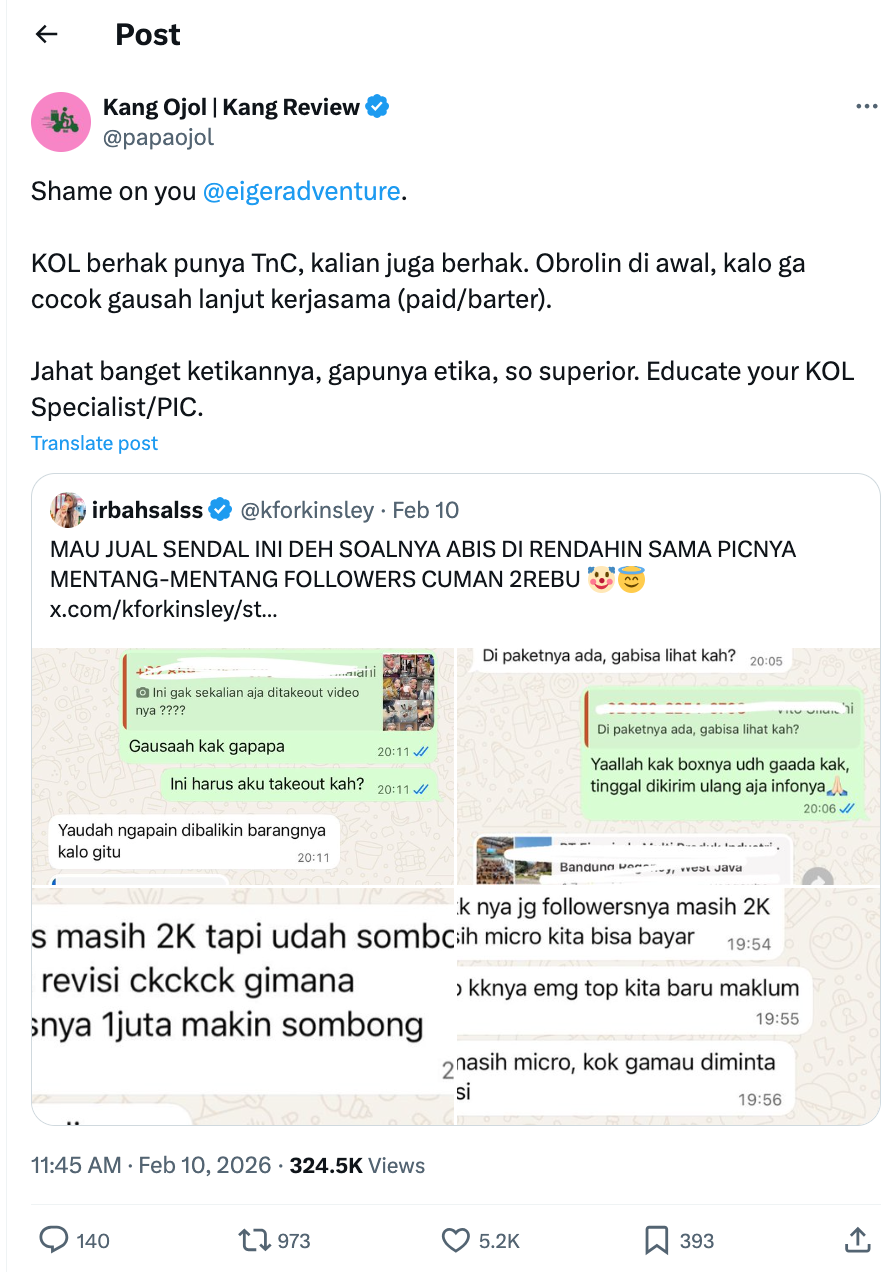
What followed was a groundswell of posts on X criticising Eiger for such behavior.
This echoes the incident in 2021 when Eiger’s then legal manager sent a legal notice to an influencer for giving their product review that was not up to their standard. In that notice, he also asked the influencer to have the post be revised or taken down.
The reviewer posted the legal notice on his social media platforms and Indonesian netizens, feeling that the brand had no right to dictate how independent reviewers should write about them, rallied to the reviewer’s cause.
The situation got so bad that Eiger’s CEO had to issue a video apology before things calmed down.
If Eiger’s management is as good as its products, it would have learned from that incident and put in place SOPs and guidelines to make sure that something like that did not happen again.
Yet Eiger did not learn from the past. Why?
Crisis-prone and crisis-ready organizations
Ian Mitroff, an academic studying crisis management, said that there were two types of organizations when it came to crises: the crisis prone ones and the crisis ready ones.
Crisis-prone organizations think they are too big to fail, think lightning will not strike twice or they are just negligent to the probability (very high because of today’s polarized, skeptical public fuelled by social media) that they may face a crisis-like situation.
They therefore do not learn from their mistakes and do not put in place SOPs and guidelines to make sure that issues do not escalate into emergencies and crises.
Cris-ready organizations, however, are ones that realise that they, like other organizations, are vulnerable to crises, polyperma ones. They therefore take steps to avoid being in crisis situations by putting into place whistle blowing practices, guidelines to prevent undesired behavior and actions and SOPs on how a problem can be escalated to a management that is trained to handle such situations.
Eiger clearly belongs to the former camp. While the reason why lies with its top management, here are some steps Eiger could have taken to make itself crisis-ready.
- Conduct a Thorough Evaluation of KOL Engagement Practices: Eiger needs to assess its internal processes and develop a clear SOP for engaging with KOLs. This should include the separation of paid and organic content, as well as respecting creator autonomy.
- Establish Clear Principles Across Teams: Eiger must align its internal teams, from marketing to legal, on shared principles regarding KOL engagement. This will ensure that all departments are on the same page when it comes to working with influencers.
- Differentiating Organic and Paid Content: The distinction between organic and paid content is crucial. Organic content represents the KOL’s authentic voice and should be respected as such. Paid collaborations, however, involve a more structured relationship where brands can guide the message and tone. This distinction needs to be clear in any engagement with KOLs, and brands should not blur these lines, as it undermines both the influencer’s credibility and the trust of their audience.
Dig deeper: Enlisting KOLs to Your Cause
Crises are Not Just a PR Problem; It’s a Management Problem
PR can help manage perception, but it cannot fix poor management.
And poor management could cost credibility, trust, and ultimately, the brand itself.