Indonesian journalists are currently ‘sedang mesra-mesranya’ (in a honeymoon phase) with AI, evolving from cautious observers to full-on power users. A fascinating research from BBC Media Action (2026), surveying 212 journalists across Indonesia shows just how personal this relationship has become: some journalists now address their AI chatbots with nicknames like ‘bro’ or even ‘sayang’ (sweetheart) while prompting. This shift proves that AI is no longer just a cold piece of tech, it has become an integral part of the daily work routine for Indonesian journalists.
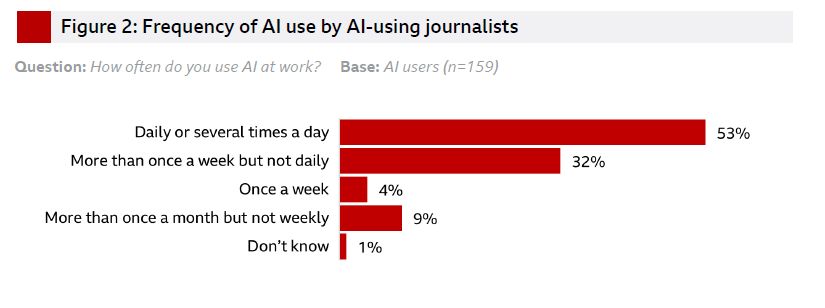
According to the study conducted from December 2025 to January 2026, 75% of Indonesian journalists now use AI, with 53% relying on it daily or multiple times a day. Journalists are using AI to handle heavy workloads, streamline editorial tasks, and keep up with the fast pace of the news cycle, according to the results of the study that was shared at Navigating AI in Newsrooms: Research Insights and Media Business Sustainability Conference held by Asosiasi Media Siber Indonesia (AMSI) and BBC Media Action, Friday (20/2/2026) in Central Jakarta.
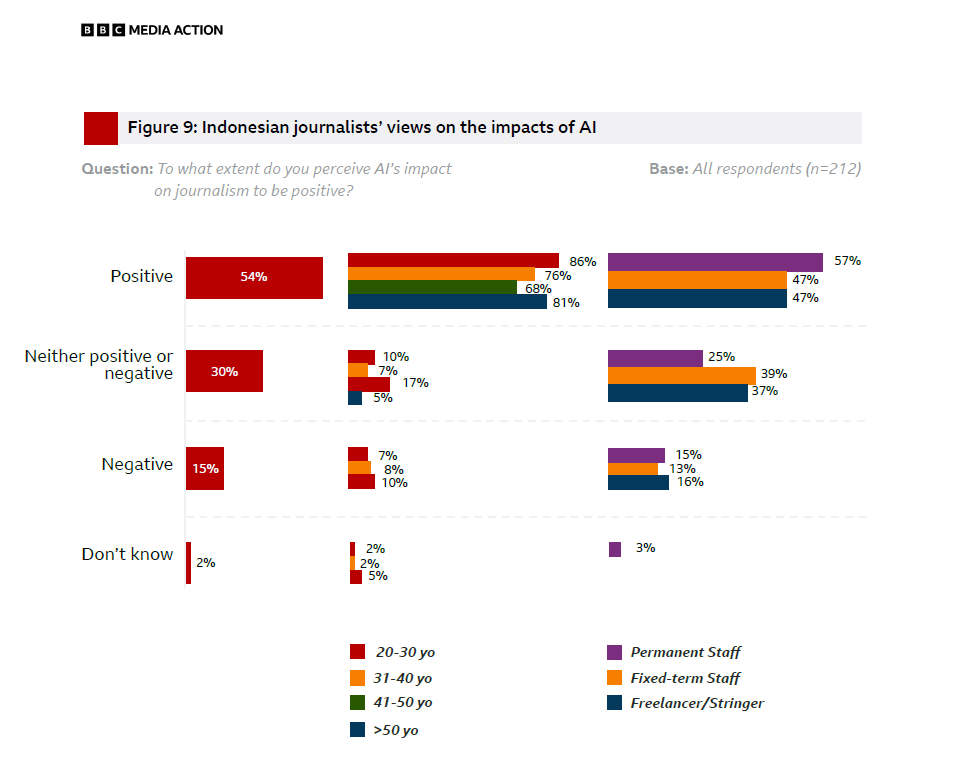
However, the ‘relationship status’ is complicated. While 70% see AI as a new opportunity, 45% still view it cautiously, concerned about how it might affect journalistic integrity. Despite these reservations, AI is becoming a permanent fixture in newsrooms, becoming a reliable partner that journalists rely on to survive the daily grind.
So how is AI reshaping newsroom dynamics?
1. AI for Managing ‘Insane’ Workloads
AI has firmly integrated into Indonesian newsrooms to manage the increasingly overwhelming demands of modern reporting. For editors, AI is becoming indispensable; many handle heavy workloads, sometimes covering 25 to 45 articles a day, and use AI assistance to speed up these demanding tasks. While the majority see AI as a tool for efficiency, 30% are concerned about the erosion of journalistic values and reduced employment opportunities.
2. The AI Powercouple: ChatGPT and Gemini
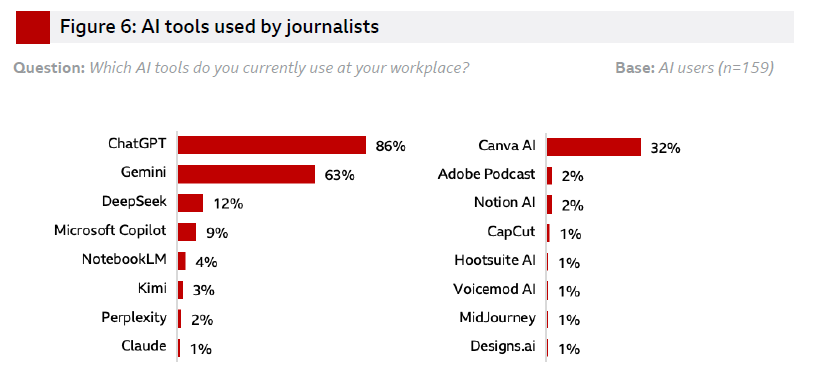
Among the AI tools in use, ChatGPT and Gemini stand out. A striking 86% of journalists use ChatGPT, while 63% rely on Gemini. These tools are favored for their speed, accuracy, and versatility. ChatGPT is particularly popular for drafting and refining text, while Gemini is used for a more analytical approach to content generation. Newer players like DeepSeek (12%) are also gaining a foothold for their perceived logical processing.
3. AI in the Creative and Editorial Process
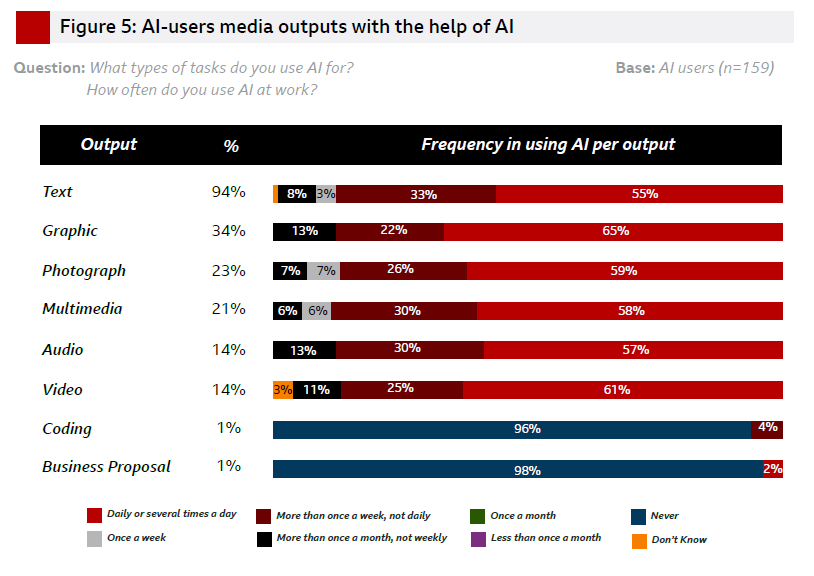
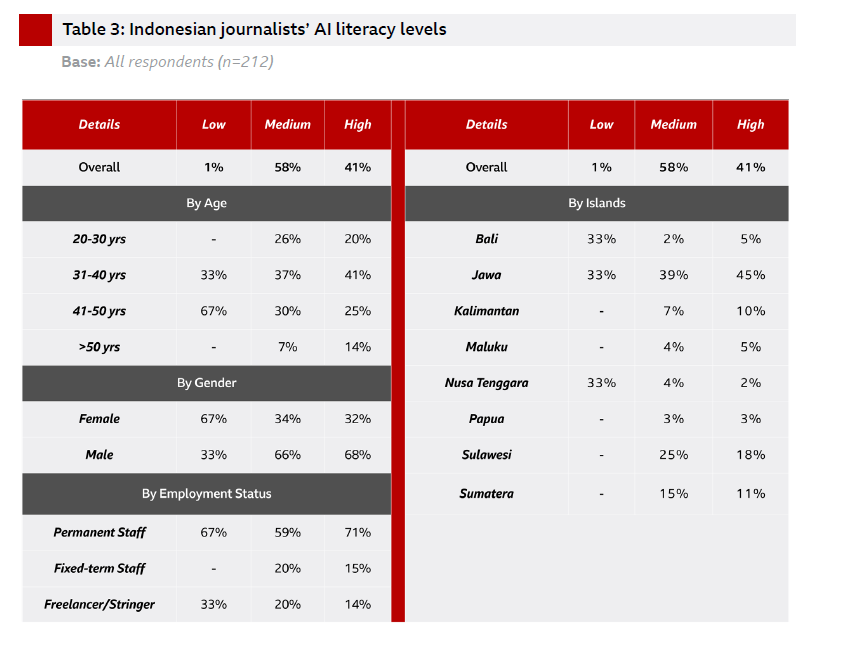
AI is transforming content creation, with journalists using it for idea generation (56%), editing (49%), and language refinement (45%). It also handles the heavy lifting in design, 32% of journalists use Canva to create engaging visuals and multimedia content. Interestingly, adoption is highest among those aged 31-40 (41% of users), the ‘mid-career’ group often facing the heaviest daily work quotas.
4. The ‘Wild West’ of AI Newsroom Policy
Perhaps the most striking finding is the lack of formal structure. Over half (52%) of journalists reported that their newsrooms have no written Standard Operating Procedures (SOPs) for AI use, often relying on informal verbal instructions instead. Furthermore, 43% have never participated in formal training, relying instead on self-directed learning. Geographically, those who haven't received training are predominantly based outside Java, in regions like Papua, Kalimantan, and Nusa Tenggara.
5. The Challenges of AI: Navigating Efficiency and Integrity
While journalists call AI ‘sayang’ they don't always trust it with the truth. Many remain cautious about using generative AI for fact-checking, noting its lack of credibility. Furthermore, because news is often highly recent, AI systems can struggle to retrieve accurate, real-time results.
But, there is a silver lining, rather than being replaced, Indonesian journalists are evolving into ‘Human-in-the-Loop’ experts. They use AI to handle the ‘heavy lifting’ of research and drafting, which frees up their time for the ‘old school’ investigative work that matters: verifying information directly with sources on the ground.
Far from being a bleak outlook, this ‘mesra tapi curiga’ (intimate but cautious) relationship shows that while AI has inevitably become the new gatekeeper for finding information, the human element remains the ultimate gatekeeper of credibility. As newsrooms move toward establishing formal guidelines, the goal is clear. Using technology to boost efficiency without ever sacrificing the integrity that makes journalism vital.
Caveat Lector. In the age of AI-driven news, this ancient warning takes on a new life. Read the BBC Media Action (2026) full report here.