Google has rolled out a notable update to how links are displayed within its AI-powered search features, a response that may reshape how users engage with source content and how brands are referenced in AI-generated answers.
Since the widespread adoption of AI Overviews, the AI-driven summaries that appear above traditional results in Google Search, publishers have raised concerns that AI-generated answers reduce click-throughs to original websites and obscure source attribution.
In response, Google is now making changes to how source links are presented within its AI Overviews and AI Mode, aiming to improve transparency and potentially counter declining site traffic.
What’s Changing in AI Overviews and AI Mode
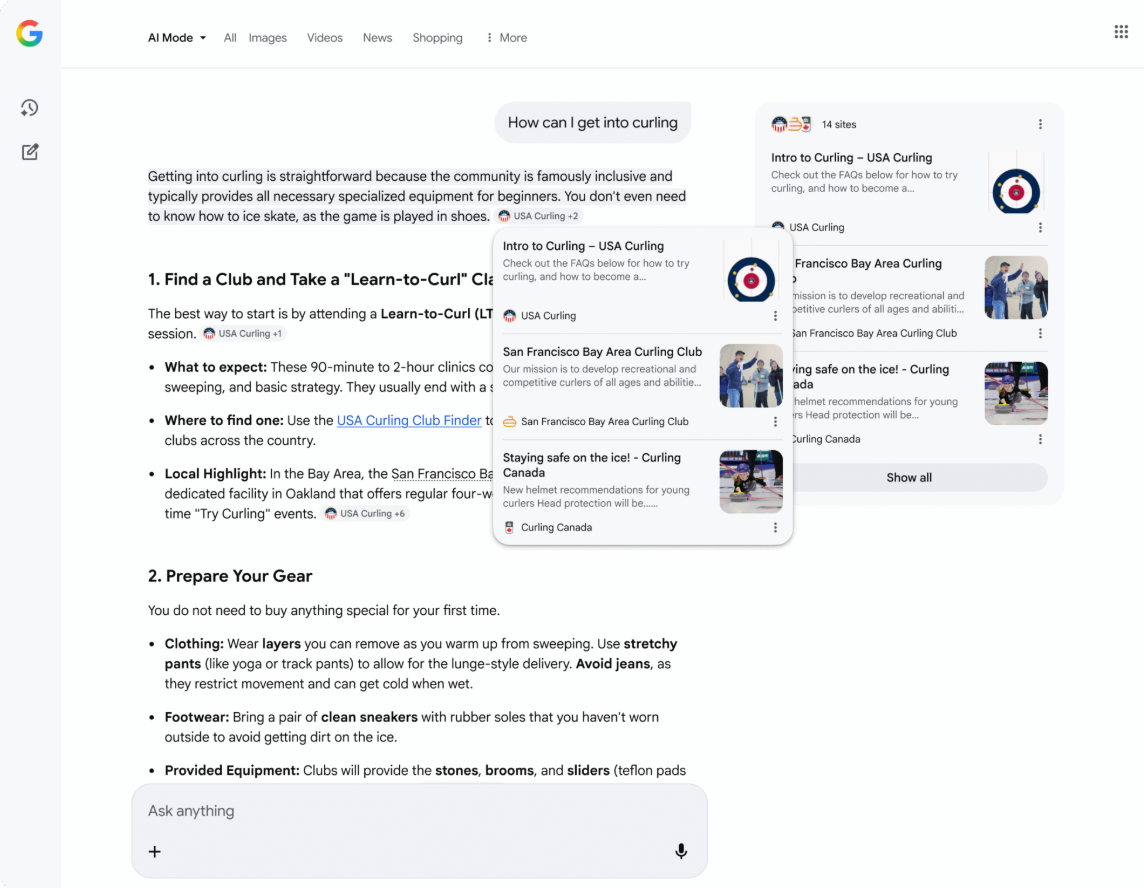
According to Robby Stein, Vice President of Product at Google Search, Google will display groups of source links more prominently inside AI-generated responses. On desktop, hovering over a cluster of link icons within an AI Overview or AI Mode result now triggers a pop-up that lists multiple source links, each with:
- the publisher or site name
- a short descriptive snippet
- and, in some cases, a thumbnail image
These enhancements aim to give users better context about source content before they click through.
Google is also increasing the prominence of link icons across AI responses on both desktop and mobile interfaces, making them visually more noticeable than before.
Why It Matters for Brands and Publishers
This update highlights a growing tension in AI-powered search: how to balance the convenience of synthesized answers with fair visibility and traffic for original content creators.
1. Improving Source Transparency
AI Overviews have been criticized for presenting answers without sufficient context about where information comes from. By surfacing links with descriptions and previews, Google is making it clearer which sources contributed to the AI-generated summary, potentially helping users make more informed decisions about which links to follow.
2. Potential Traffic Implications
Part of the motivation for this update appears to be addressing concerns from publishers that AI summaries reduce click-through rates to websites. Early industry analysis has documented that AI Overviews can significantly decrease organic click-throughs, prompting debate over how AI search should compensate original content sources.
3. Context Before Click
By showing descriptions and thumbnails, users can preview what a page contains before clicking. This could improve engagement quality,meaning that users who do click may be more likely to find relevant content,even if overall click volume remains lower than traditional search.
Learn more: how AI choose brand to mention
What This Means for AI Visibility Strategy
For brands and content creators, this update underscores a broader reality: being included in AI-generated summaries is not just about having content indexed,it’s about how well that content can be attributed, contextualized, and trusted by AI systems.
Here are some key strategic takeaways:
- Attribution signals matter more than ever. If AI is surfacing link groups with descriptive context, content that is clearly authored, well-structured, and externally verified stands a better chance of being included.
- Contextual relevance builds visibility. Simply ranking for a keyword is no longer sufficient; content needs to help AI explain a topic in a way that aligns with how humans interpret authority and relevance.
- Brand signals need reinforcement. Repeated references across independent and credible sources increase the likelihood of AI trusting that source enough to include it in its answer.
This aligns with broader shifts in how AI-mediated discovery reshapes visibility, trust, and reputation in the digital ecosystem,a topic we have previously examined in depth on this blog.
Broader Industry Context
Google’s link visibility update comes amid ongoing conversations about the role of AI in search and the potential impacts on the open web. Critics have raised concerns about how AI Overviews might reduce awareness of original sources or editorial control, while regulators in Europe and the United States continue to scrutinize how AI features affect competition and access to information.
By making source links more prominent, Google is signaling a step toward addressing transparency concerns,but the long-term effects on organic traffic, publisher revenue, and the broader search ecosystem remain to be seen.
AI Overviews and the New Rules of Visibility
The enhanced link visibility in Google’s AI Overviews represents a meaningful shift in how AI-driven answers connect back to original sources. For brands and publishers, it emphasizes the importance of not only being included in AI responses but also ensuring content can be recognized and trusted by AI systems.
The update underscores a critical trend in AI-mediated discovery: visibility increasingly depends on how well content can be attributed, contextualized, and cited,not just how it ranks.
If you’re interested in how changes like this affect your AI visibility strategy, reputation signals, and content design, stay tuned for more insights on Maverick Indonesia’s blog.