AI systems choose which brands to mention by expanding a single question into multiple sub-queries, evaluating passages across many sources, and synthesizing answers based on relevance and trust, not by reusing search rankings.
It’s easy to assume AI mentions follow the same rules as featured snippets or top rankings. They don’t.
AI systems don’t start with positions. They start with usefulness, assembling answers from the information that best fits the question.
This distinction explains why brands with strong SEO visibility can be absent from AI-generated answers, while lesser-known brands sometimes appear. The outcome is driven by how AI systems retrieve, evaluate, and assemble information, not by where a page ranks.
1. AI Expands One Question Into Many Queries (Query Fan-Out)
AI systems rarely evaluate a query as-is. They expand it into many related queries before retrieving information.
When a user asks an AI assistant something like “best analytics tools for startups,” the system internally explores related angles such as:
- analytics for early-stage companies
- affordable analytics platforms
- product analytics vs marketing analytics
This behavior often referred to as query fan-out, means AI systems retrieve content across a much broader contextual space than a single keyword query.
Google has publicly described this shift toward synthesis and multi-step understanding in its documentation on AI-powered search features.
If a brand appears only in one narrow framing, it has fewer chances to be selected. AI visibility increases when brands show up consistently across multiple contextual interpretations.
2. AI Retrieves Passages, Not Pages (Passage-Level Retrieval)
AI systems evaluate relevance at the passage level, not the page level.
Instead of selecting a single “best” page, AI systems extract small, relevant sections from many documents and weigh them together before generating a response. A clear paragraph that directly answers part of the question can matter more than a long, comprehensive article.
This behavior aligns with retrieval-augmented generation (RAG), where models retrieve multiple relevant passages and synthesize answers rather than relying on one source.
This is where brand mentions become especially important.
Search engines have long used brand mentions, even without links as signals to understand entities, topical relevance, and real-world authority, as outlined in Search Engine Land’s guide to brand mentions. AI systems extend that same logic.
Mentions that clearly explain who a brand is and what it does provide contextual building blocks AI systems can reuse when assembling answers. Vague, list-only, or inconsistent mentions contribute far less to selection.
3. Selection Is Probabilistic, Not Deterministic
AI does not choose brands once. It chooses them repeatedly across many retrieval attempts.
Each fan-out query and passage retrieval is effectively a new selection event. Brands that appear consistently across these events gain higher visibility. Brands that appear sporadically are easy to miss.
This explains why strong rankings do not guarantee AI mentions. Multiple industry analyses show low overlap between Google SERPs and AI-generated answers.
SparkToro and iPullRank have highlighted that ranking in Google’s top 10 results gives brands only about a ~25% chance of appearing in AI answers, with overlap ranges typically between ~19% and ~39%.
From an AI perspective, brand mentions function as repeated validation events.
Each consistent third-party mention reinforces entity recognition and topical relevance, increasing the probability that a brand is selected during retrieval.
What changes in generative search is not the importance of mentions, but how directly they influence selection.
4. Relevance and Consistency Outweigh Classic SEO Signals
AI selection prioritizes relevance and consistency over traditional ranking signals.
According to Search Engine Land backlinks and authority still matter, but that’s no longer the whole picture. Google’s evaluation goes beyond backlinks. It increasingly focuses on your brand’s identity as an entity, the contexts in which your brand is mentioned across the web, and the trustworthiness, consistency, and topical relevance of those mentions.
What This Means for Brands
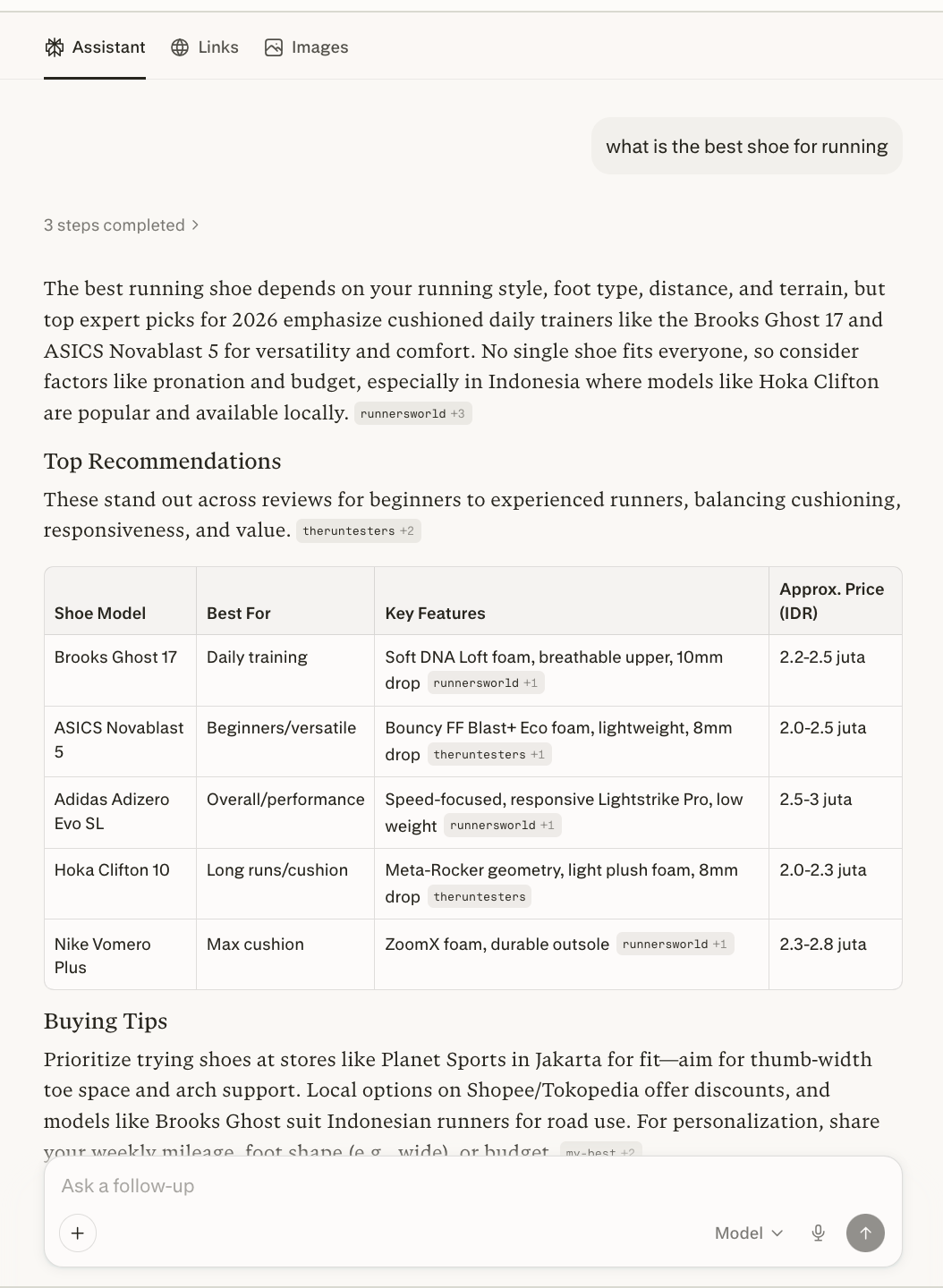
AI systems don’t ask, “Who should we promote?”
They ask, “What information belongs in the answer?”
Brands are mentioned when they fit that answer naturally. Visibility comes from coverage, clarity, and contextual relevance, not ranking position.
If your brand is rarely mentioned, the problem is usually not optimization, it’s how narrowly or inconsistently your brand appears across the contexts AI evaluates.
From Understanding Selection to Influencing It
Understanding how AI selects brands is only the first step. The real challenge is intentionally shaping those signals across content, PR, and technical foundations so AI systems consistently understand and trust your brand.
This is where Generative Engine Optimization (GEO) becomes a strategic discipline.
How Maverick Indonesia Helps with MavGEO
At Maverick Indonesia, we developed MavGEO to help brands move beyond rankings and optimize for AI selection, trust, and representation.
MavGEO focuses on:
- Entity clarity across owned and third-party sources
- Passage-level content structure
- Trust reinforcement through consistent brand mentions
- Monitoring how brands are represented in AI-generated answers
If AI systems are already speaking on your behalf, MavGEO helps ensure they understand your brand well enough to represent it accurately.
Learn more how Maverick Indonesia helps brands become visible where AI makes decisions.