What do you do when social media is rife with a story of the theft of 413,714 of chocolate bars specially shaped to look like FI Formula cars that were meant for a global marketing campaign?
Well, if you were KitKat, you lived up to your brand and had a break instead.
Instead of panicking or getting righteous over the theft, KitKat was factual and even sounded a bit blase in its first statement addressing the incident.
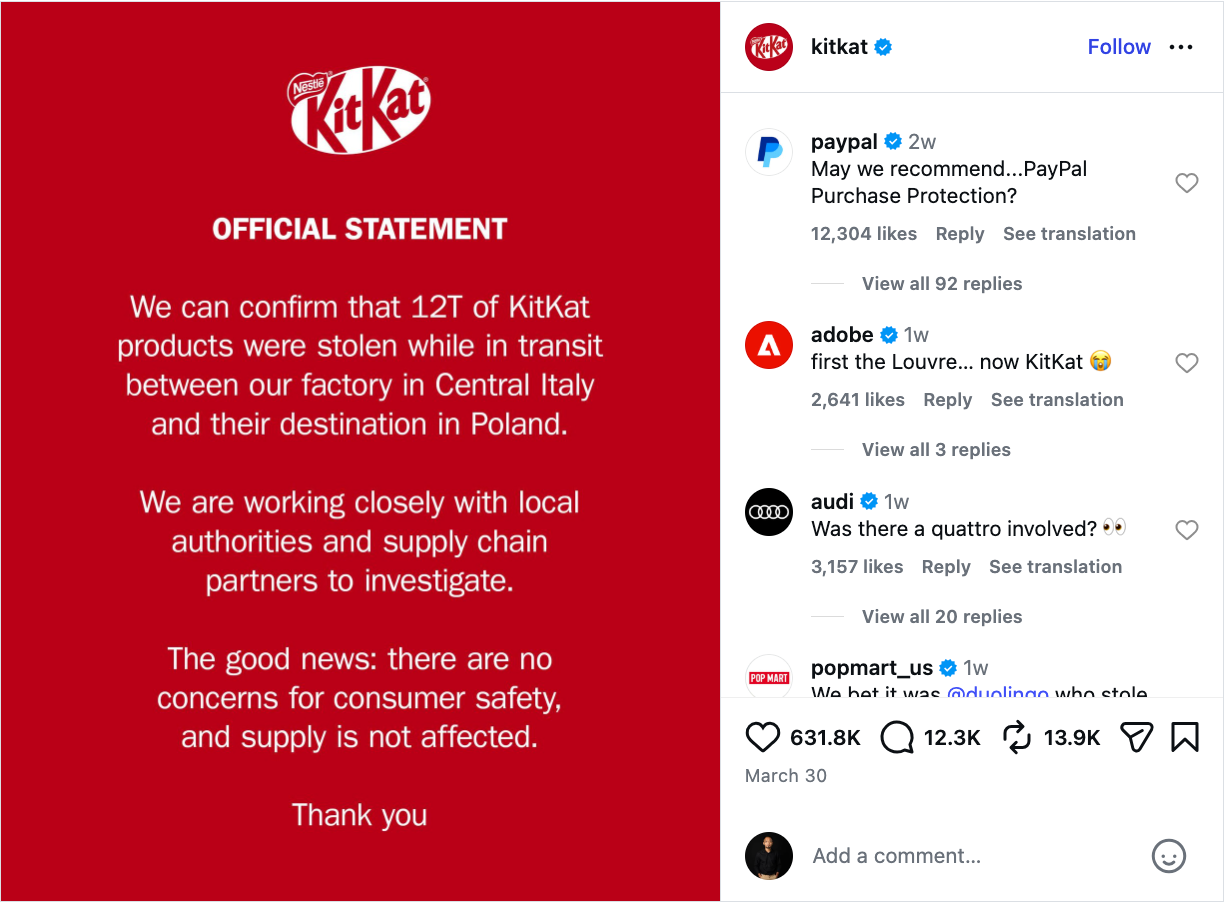
KitKat hit all the right notes, acknowledging the theft, explaining that they were working with local authorities and partners to investigate and ended with some upbeat news: Consumer safety and its supply of chocolates, expected to spike because of the upcoming Easter holidays remain unaffected.
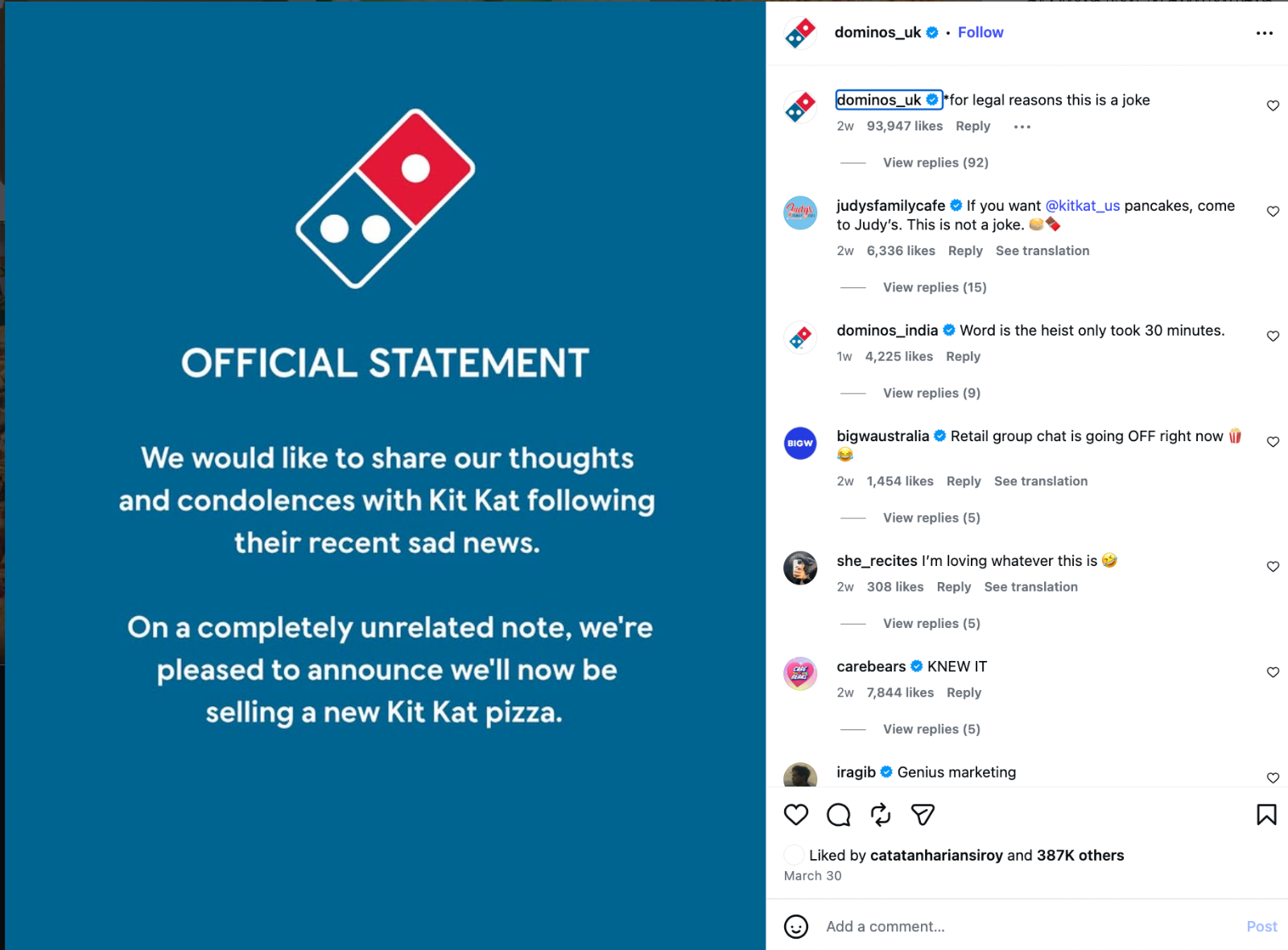
KitKat’s relaxed approach to announcing about the theft was so positive that other brands began to riff off its response, playfully mimicking the KitKat announcement ad while playfully plugging their own brands and products.
Domino’s Pizza UK was one of the first brands to parody KitKat’s ad:
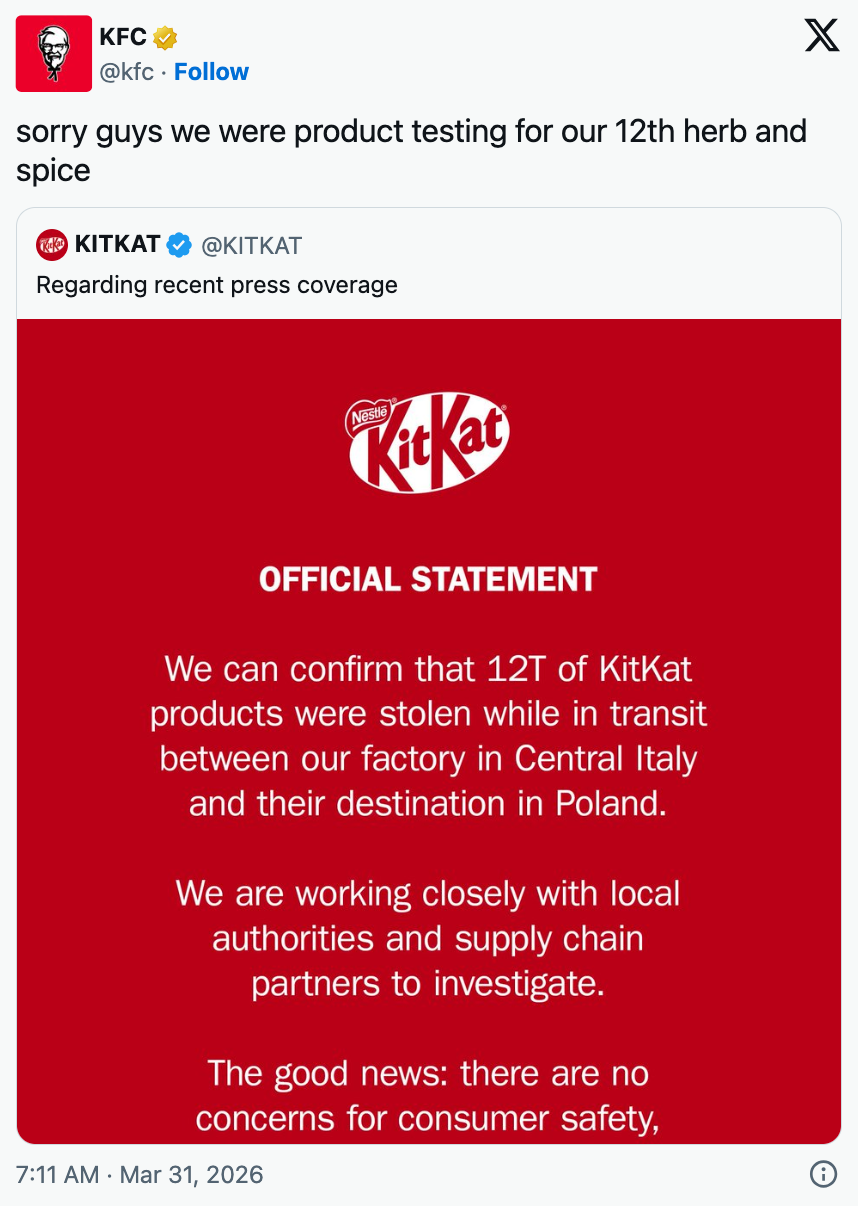
Then KFC “defensively” denied being involved in the chocolate heist because they were busy testing fortheir 12th herb and spice.
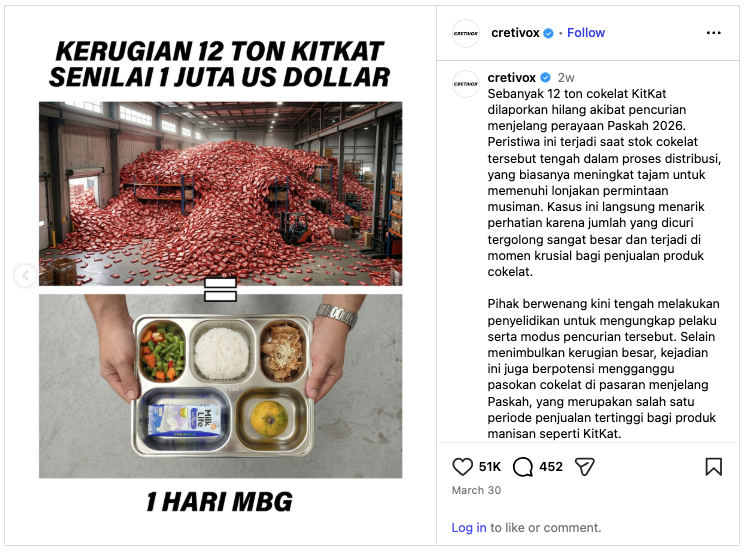
In Indonesia, homeless media Cretivox also jumped in on the fun while taking a pot shot at everyone’s favorite pinetta - the MBG program.
They broke down KitKat’s losses using an MBG calculator, translating a multimillion-dollar heist into the equivalent number of days of MBG.
Kit Kat kept up the tongue-in-cheek humor by commenting on the posts of these brands with their slogan: “Have a break, have a KitKat”. The comment sections became playgrounds. And through all of it, KitKat, if it was a person, was sitting back and having a break by munching on a Kit Kat.
What's In It For the PR Practitioners?
Here's the part worth sitting with, especially if you work in communications or marketing.
The heist didn't make KitKat. The response did. How a brand reacts to a problem is itself a brand statement. Silence says something. Over-explaining says something. A meme says something.
Every choice you make in a crisis, what you post, what you ignore, what tone you use, is a form of communication, whether you plan it to be or not.
Brands that have built a clear corporate character give everyone who works on them a guide for what the brand should sound like, feel like, and act like. Especially when things go sideways.
KitKat didn't invent their relaxed, witty personality in 2026. They've been building it for decades, through campaigns, taglines, and the quiet consistency of showing up the same way, time after time. So when the heist happened, there was no ambiguity in how to communicate. Their brand values had already become the north star to define the tone.
That's the thing about a strong brand character: it doesn't just guide the good days. It carries you through the chaotic ones.
So here's the one test worth applying to every piece of communication your brand puts out: Does this sound like us?
Not "is this professional enough?" Not "will this go viral?" Just: does this sound like us?
If the answer is yes, you're on the right track. If the answer is "I'm not sure", that's worth pausing on. Because if the people building the brand can't answer that question clearly, the audience definitely can't.
As The Professor once said in Money Heist: "Sometimes, a truce is the most important part of a war."
KitKat didn't fight the internet. They didn't fight the jokes or the brands piling on with their fake alibis. They called a truce, with the chaos, with the humor, with the moment, and in doing so, they won something no crisis budget could have bought. And they had a Kit Kat while taking a break.