Nobody expected Walmart to tap into The Devil Wears Prada 2. And maybe that’s exactly the point.
Working in PR, I’ve seen countless brand collaborations come and go. Some feel expected, some feel forced, and some are clearly chasing whatever is trending at the moment. But this partnership was one of the few that genuinely made me pause and think.
For years, brand partnerships followed a familiar formula: luxury stayed with luxury, fashion films partnered with fashion houses, and collaborations were expected to make obvious sense. The goal was consistency and brand alignment.
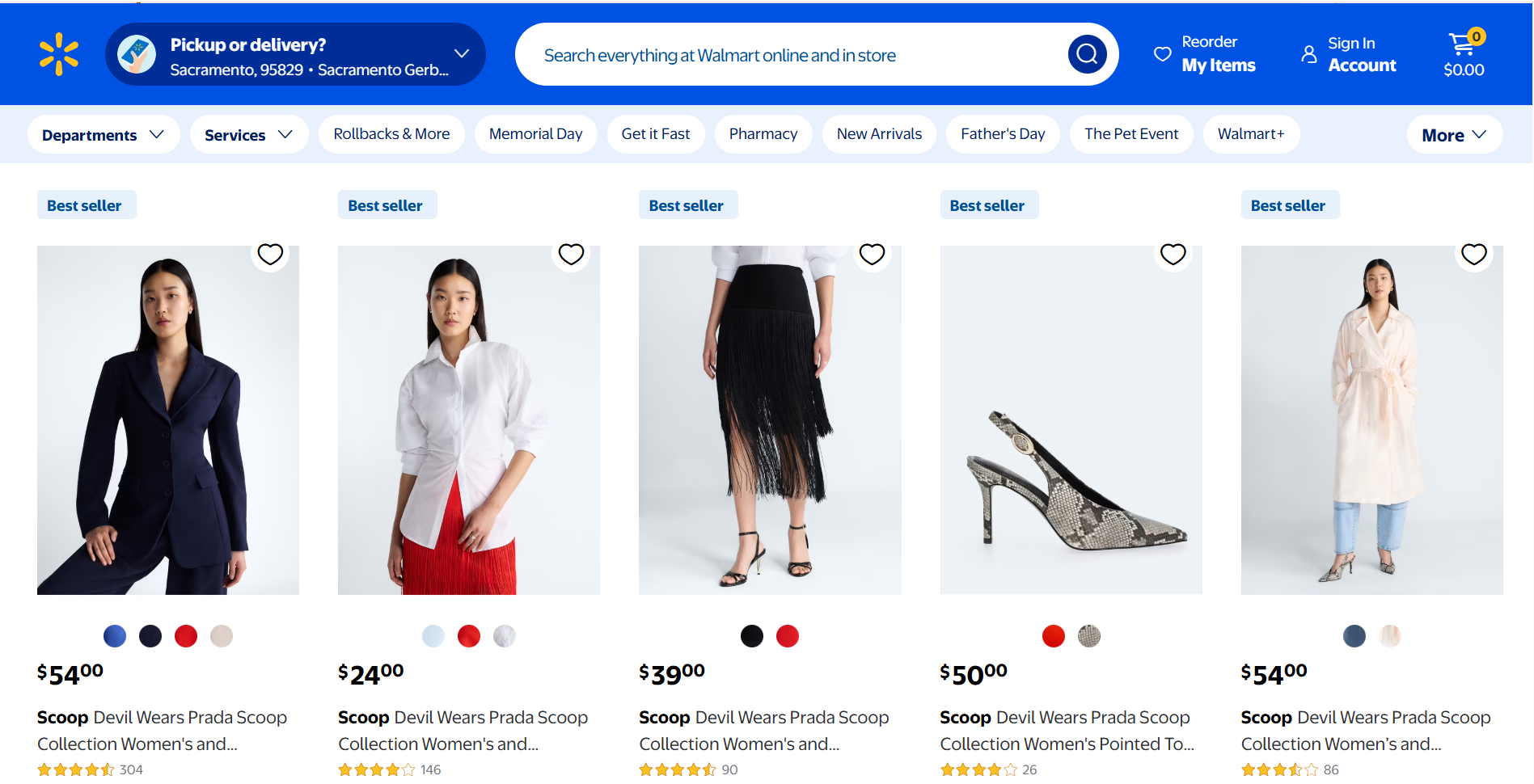
But Walmart’s collaboration with The Devil Wears Prada 2 through its private label, Scoop, feels different. Not because it naturally fits, but because it doesn’t.
On one side, you have Walmart: accessible, mass-market, practical. On the other, The Devil Wears Prada: a world built on exclusivity, ambition, designer fashion, and the intimidating glamour of the fashion industry. Traditionally, these two worlds should not overlap.
Yet somehow, the partnership works.
That is because brand collaborations today are no longer just about obvious brand fit. They are about cultural relevance and entering a world audiences already emotionally understand.
Walmart is not trying to become Prada. Consumers know that. But through scoop’s limited-edition collection inspired by The Devil Wears Prada 2, Walmart gets to borrow some of the aspiration and fashion credibility attached to the franchise.
The collaboration helps position scoop as more trend-aware and style-conscious while still remaining accessible to Walmart’s audience. In other words, Walmart is not selling luxury. It is selling access to the fantasy of luxury.
And in many ways, this is also a positioning exercise.
Walmart is not changing its identity overnight. It is still a mass retailer. But through Scoop’s association with The Devil Wears Prada 2, the brand gets to subtly shift how audiences perceive its fashion category, from purely affordable and functional to something more current, style-conscious, and trend-forward.
Because today, positioning is no longer shaped only by what a brand says about itself. It is also shaped by the narratives and spaces it chooses to be part of.
This is why entertainment IP has become so valuable. The Devil Wears Prada is not just a movie franchise. It represents ambition, fashion anxiety, workplace identity, and iconic pop culture references that audiences still quote nearly twenty years later.
That kind of emotional association is difficult to build from scratch. So instead of creating entirely new conversations, more brands are tapping into worlds audiences already care about.
We saw this happen with Barbie, when brands rushed into pink packaging and nostalgia-driven campaigns. We saw it again with Wicked, where collaborations centered around fantasy and theatricality. Entertainment today no longer functions as just content. It has become something brands want to participate in.
But that does not mean every brand should automatically jump into every trending moment.
The partnerships that stand out are usually the ones that add something interesting to the conversation, not just visibility. What makes Walmart’s collaboration compelling is the tension itself. The contrast between affordable retail and luxury fashion creates curiosity because audiences understand how unexpected the pairing is.
And that unexpectedness becomes the strategy.
At the same time, The Devil Wears Prada 2 also benefits from partnerships like this. While the franchise already has strong fashion credibility, collaborations with mainstream retailers help push the film beyond fashion circles and into broader audience conversations.
In many ways, both sides are borrowing from each other.
Walmart gains aspirational value and stronger style credibility. The Devil Wears Prada 2 gains scale and accessibility.
And maybe that is what modern brand partnerships look like now. Not perfectly matched brands sitting side by side, but brands strategically entering worlds that audiences already feel connected to.
Because in today’s media landscape, relevance is no longer built through visibility alone. It is built through participation.
As Miranda Priestly would probably say: “That’s all.”