The first press release I ever killed as a journalist at detik.com came with a headline that read: "Indonesia XXX Bank Supports National Financial Services Sector Development Through Strategic Partnership, Ready to Support National Sovereignty Towards the Golden Indonesia 2045 Vision." Twenty-three words. 184 characters. It took me five seconds to read the title alone. I didn't open it.
You didn't even finish reading that headline, did you?
I already knew what was inside. Bapuk or ugly, in Indonesian. Low news value. 3,500 characters of the bank and its executives congratulating themselves for signing an MoU with someone.
Somewhere out there, a PR team is still celebrating that one. They hit send. They followed up. They cc'd the wrong editor and called it relationship-building. And now the release is sitting in a folder marked low priority. Which is, frankly, a quiet grave.
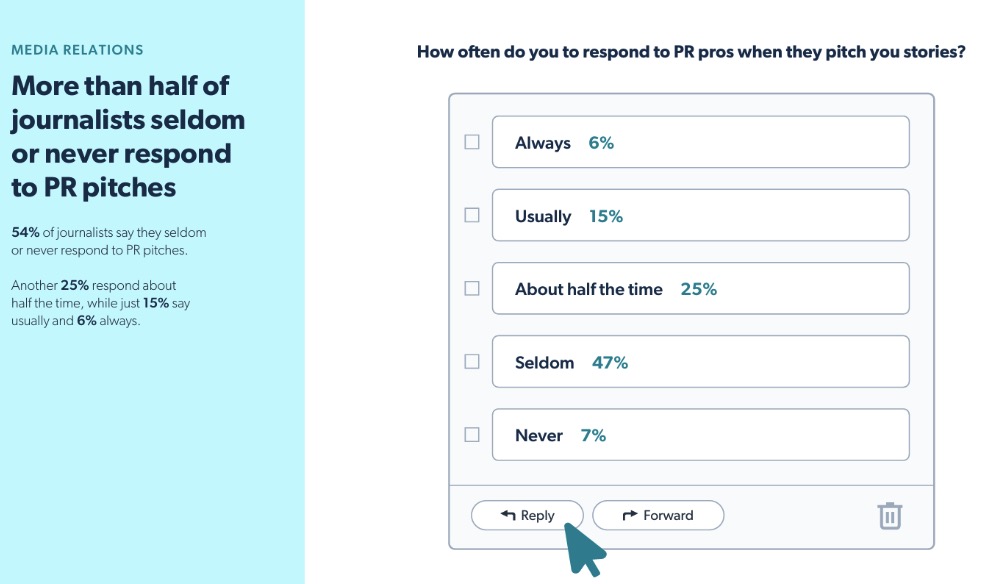
Source: Muck Rack State of Journalism Report 2026
As a former journalist I'm used to calling things out for what they are. So what I have to tell you about writing press releases well is that they are damn hard work. So hard that the easiest way to learn how to write is by learning what not to do. So let's get cracking.
Rule 1: Assuming Your Brand Is the Center of the World
The fastest path to irrelevance is staying inside your own corporate bubble. You have your key messages, your strategic positioning, your Q3 objectives. Your new co-working layout feels groundbreaking. Your "synergistic partnership" feels historic.
So you trot out all these wonderful points in your press release.
Fatal mistake.
Journalists are not interested by how much things matter to you or your CEO. They are interested in reporting news. Newsworthiness arises when there is something new, impactful, superlative and prominent people are involved.
If you don’t have all these elements in your copy, then haven't written a press release but you've written a very expensive diary entry. The real tell? When a journalist replies: "This reads as branded content, please reach out to our marketing team for advertorial rates." That response isn't rude. It's accurate.
And yet, even knowing this, many communicators make a subtler version of the same mistake: mistaking an event for a news item. Press releases that begin Company XYZ held a press conference today, or announced a product launch, or hosted a roundtable get spiked immediately.
The event is not the news. The news is what that event means for your customers, your industry, or the wider world. Always argue for the greater good, not yourself.
Rule 2: Write a Headline Longer Than a Pramoedya Novel
Write a headline that takes three breaths to read aloud and you've already lost before anyone has read a single word of your actual release.
In Indonesia, the sweet spot sits between 51–75 characters. From Maverick Indonesia's own findings, Kompas.com's CMS enforces a hard cap of under 70 characters. Not as a suggestion, but as a system constraint. An editor gives your pitch 5 to 10 seconds, not because they're lazy, but because there are forty more pitches sitting right behind yours.
To make it concrete: that 23-word headline from the lead? It should have read something like "XXX Bank Partners with X to Expand Financial Access." Twelve words. One clear idea. Something an editor can actually use.
If they have to scroll just to find the point, they won't.
Length isn't thoroughness. It's friction. And in a newsroom, friction is a rejection letter you never receive.
Rule 3: Yap Until the Point Disappears
Here's a test. Read your press release out loud. Count how many times you use words like bukti atas komitmen, memperkuat posisi, or menyambut baik. Now ask yourself what any of them actually told the reader.
Nothing. They're highway billboards. Visible, familiar, and completely ignored.
These words have been used so many times in Indonesian press releases that editors no longer read them. They read past them, scanning for the one sentence that actually says something. If that sentence doesn't exist, the release doesn't either.
If words have stopped doing the work, stop using them. Replace one bloated paragraph with a single well-made infographic. Journalists are time-poor and visually fluent.
A clean chart communicates in three seconds what five paragraphs of corporate noise cannot and it gives an editor something to actually publish. Drop it directly in the body of the release, or send it as a separate image in your email pitch. Either works. What doesn't work is leaving it out entirely.
Words fill space. Visuals earn it.
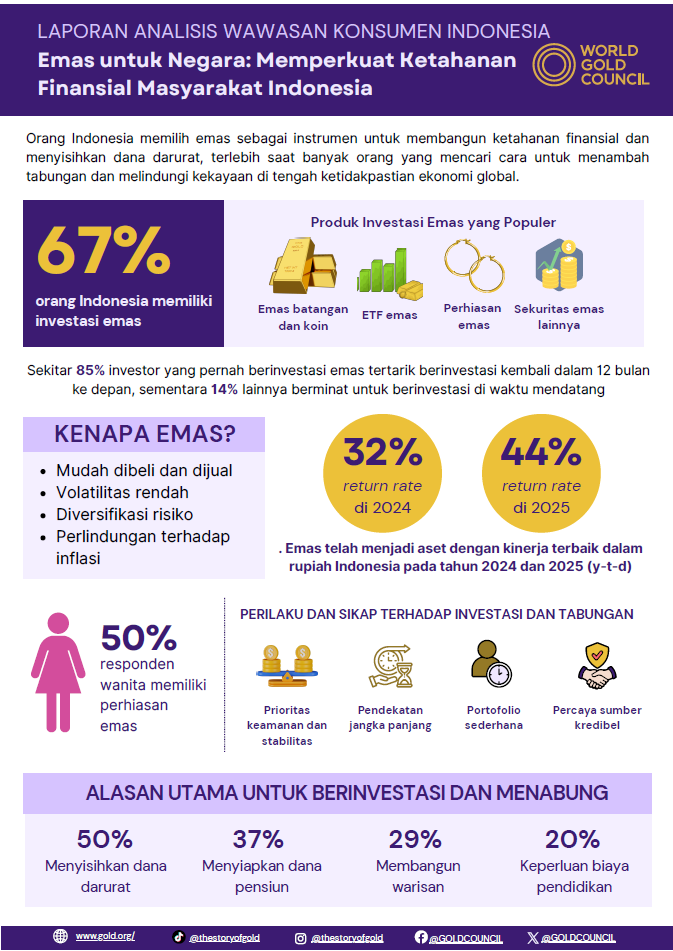
An example of a simple infographic chart made by Maverick Indonesia for World Gold Council
Rule 4: Thinking They're Probably Just Busy and They'll Get Back to You
Here's something nobody says out loud: journalists aren't cold. They're exhausted. A Kompas.id article put it plainly. The average Indonesian journalist works more than eight hours a day, with some going from early morning straight through to the following dawn. Most work six days a week, and on their day off they're still on call for breaking assignments. The hours are long enough that basic things like family, hobbies, and personal life become difficult to maintain
That's the person sitting on your press release.
Between hard deadlines and an inbox that never empties, most have developed a three-tier filter for deciding who gets a response: Do I know this person? Did someone I trust vouch for them? Are they offering something with a clear news hook or an explicit paid collaboration?
If you don't clear any of those bars, you're not being ignored. You're just deprioritized by someone with forty other emails and a 5pm deadline. They're not busy. They moved on.
So stop waiting to be discovered. Go to events. Show up at media roundtables. Stop being an anonymous email address attached to a logo. Most Indonesian outlets run on a quota of 6–8 pieces per day.
If you can reliably deliver clean, ready-to-use material that helps a journalist hit that number, you stop being a nuisance and become something rarer: a useful contact.
That's the relationship you're actually building. It just takes longer than one press release.
Rule 5: Follow Up With "Has It Been Published Yet?"
If you want to be blocked in a single message, this is the one.
Journalists guard their editorial independence the way editors guard their headlines; personally, and with memory. I saw this every day at detik.com and Kaltimkece.id. The moment you ask whether your release has been published yet, you've stopped being a source and started being a scheduler. They notice. They file it. They don't forget.
But here's the thing: even those same journalists understand the value of a good PR relationship. More than half say those relationships matter to how well they do their job.
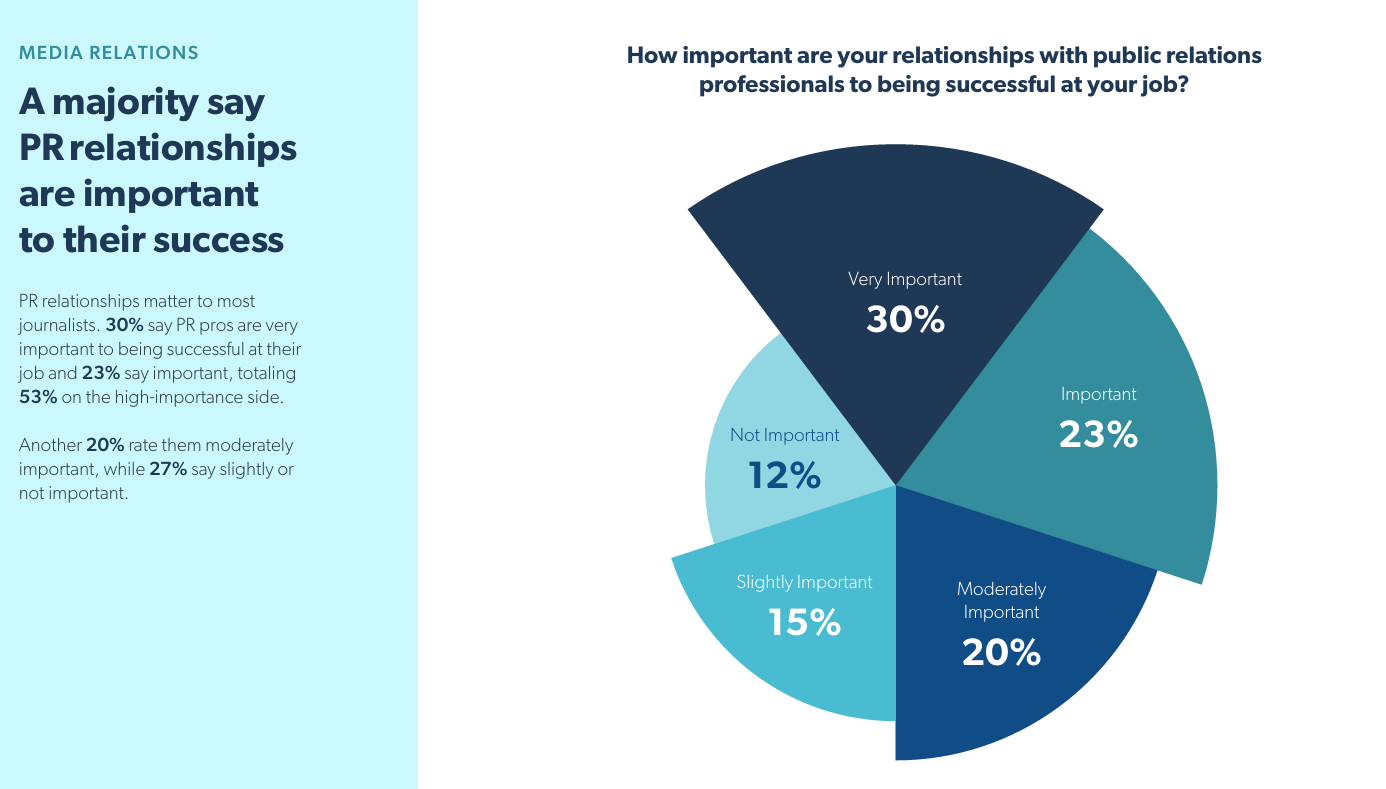
Source: Muck Rack State of Journalism Report 2026
53% of journalists say PR relationships are important or very important to doing their job well. That door is already open. Don't slam it shut with a clumsy follow-up.
The smarter follow-up doesn't ask. It offers. "Do you need a supporting data point or a specific quote to round out the piece?" That one question does two things at once , it respects their editorial judgment and it keeps the door open. In my experience, it's far more likely to surface an honest conversation, sometimes even an off-the-record read on how the industry actually sees your client.
One question opens a door. The other gets it closed in your face.
Final Thought: The Inversion
Every failure above shares one root cause: you wrote for yourself.
Invert the whole thing. Stop asking "what do we want to say?" Start asking "what do journalists want or need to hear to write this up as a story?
That answer is your press release. In an attention economy where a hundred press releases hit the same inbox before lunch, the only edge you have is a story worth stopping for.
And if you're going to fail, fail on the right side of the desk: the one facing outward.
"Invert, always invert." — Charlie Munger
Avoiding stupidity is easier than seeking brilliance. I'm still learning that. We all are.