I used to be the poacher. These days I act as the game keeper when it comes to media interviews. I went from setting the traps and asking the tough questions to anticipating those exact tactics. Now, my job is to prepare executives to navigate those hazards safely.
And, Boy, I can tell you that the experience has been transformative when it comes to media handling skills, commonly known as media training in the industry.
In my former life as a journalist, when interviewing a company executive or other high ranked officials, I’d revel in the thrill of digging past the official PR line to find the unmanufactured truth, slicing through a company's carefully prepared "defense."
Like a clinical striker, a good reporter instinctively spots the smallest gap and takes the shot.
Now, as a PR consultant involved in training executives how to field questions from journalists, I’ve come to appreciate how difficult it is for an untrained interviewee to respond to hard questions and how easy it is for a trained interviewee to control and steer the engagement.
Why Media Handling Matters More Than Ever
A single interview can shape public perception of a brand within hours. For companies operating in competitive or high-scrutiny industries, media handling is no longer a nice-to-have skill but a business necessity.
At Maverick, media training goes far beyond explaining techniques in theory. We recreate interview scenarios that mirror real media pressure, placing participants in situations where their controls are truly tested.
There is always a small sigh of relief when the interview ends (a subtle reminder that good training is meant to prepare you for the real battle). From there, we identify strengths and weaknesses, refining raw responses into disciplined messages that align with a company’s values and business objectives.
Our latest session with Fore Coffee offers a clear example of why this preparation matters. In a fiercely competitive ready-to-drink coffee market in Indonesia (some would even say saturated), reputation becomes a fragile asset, and disciplined messaging is not merely desirable but essential.
The ABC Technique: A Simple Framework for Staying in Control
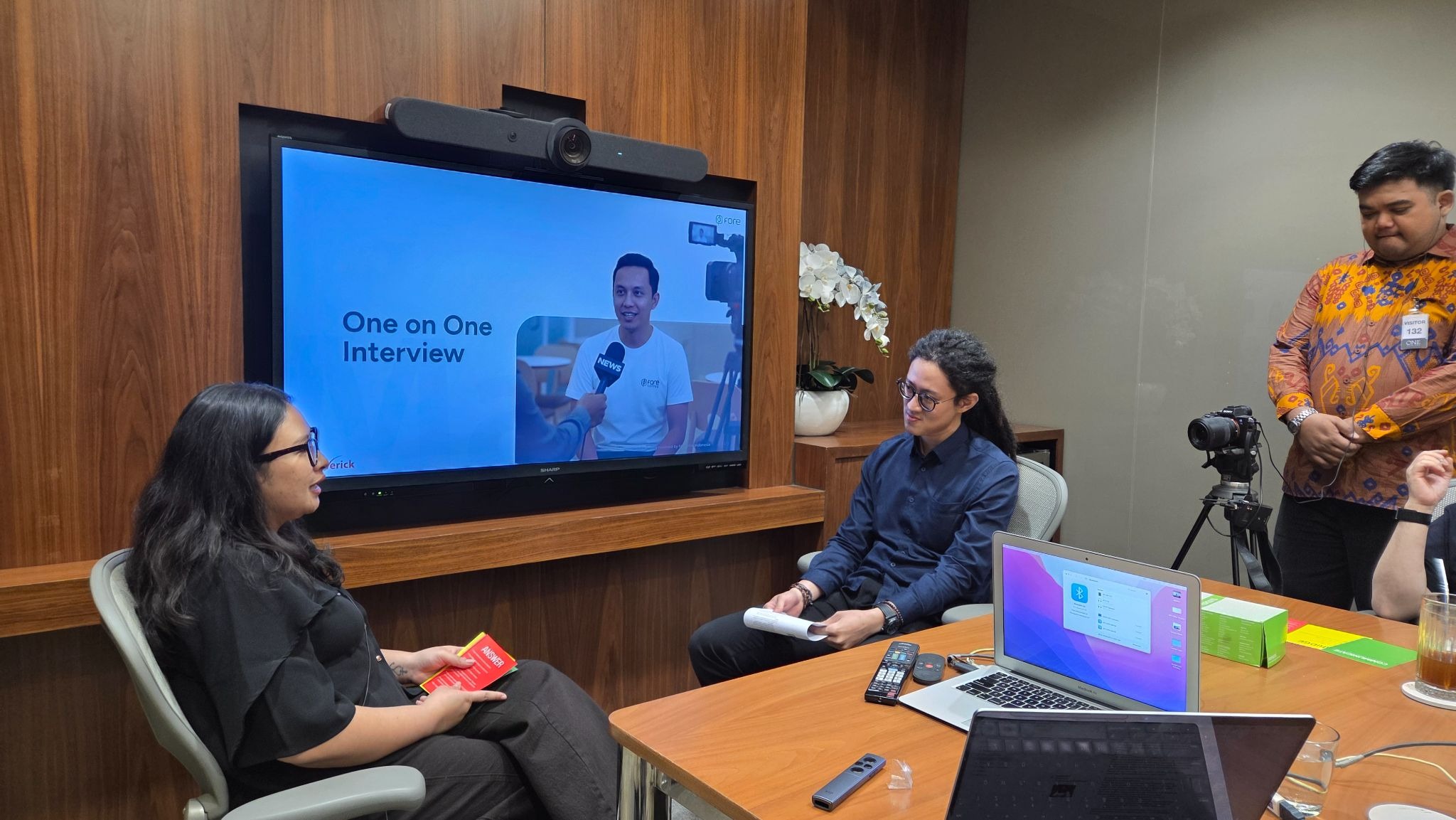
We put participants in ambush-style interviews to the more relaxed podcast setting to identify communication gaps. We urged their spokespeople to use the “ABC” techniques to pivot conversations back to core brand messages when faced a challenging question.
This maneuver is also called the ABC technique because it comprises three parts: A for Acknowledging the question, B for Bridging you from a question you don’t want to answer to one where you do, and C where you communicate your key messages.
For instance, the assumption that Fore Coffee carries an “expensive” price tag often leads to a critical question: how can the brand compete with cheaper rivals while expanding into tier-2 and tier-3 cities in Indonesia? Simply agreeing risks making the expansion sound unrealistic, while outright denial could undermine the brand’s premium positioning.
Instead, we train spokespeople to acknowledge the concern without amplifying the journalist’s framing, then bridge and reframe the conversation: early entries into smaller cities have shown strong demand.
From there, the key message follows, Fore’s pricing worths the added value and experience it offers, from premium packaging to comfortable spaces designed for customers to stay and work.
A similar situation arises when journalists ask about global expansion following the opening of a store in Singapore, even though it is not yet the company’s immediate priority. The spokesperson can begin by acknowledging the question and noting the encouraging early growth in Singapore.
From there, the conversation is bridged toward comparing global and domestic opportunities, before delivering the key message: with vast untapped potential in Indonesia’s tier-2 and tier-3 cities, Fore Coffee is currently prioritizing local expansion while maintaining steady growth in Singapore. A strategy that reflects both prudence and long-term optimism.
Well, controlling the course of the interview is actually quite easy when you know the technique. It is a bit tricky to execute, but once you get the hang of it the interviewee can avoid undesired questions and steer the interview to topics where they are comfortable.
Media Training as a Strategic Reputation Defense
Media training is often misunderstood as a tool for polishing appearances. In reality, its real value, to me, lies in helping organizations respond under pressure with clarity, discipline, and consistency.
When a spokesperson is unprepared, even a simple interview can create confusion, invite misinterpretation, or weaken stakeholder trust. This is why media training should be seen not merely as communication coaching, but as part of a broader reputation defense strategy.
As Muck Rack notes in its guide to executive media training, even a single executive interview can influence investor confidence, employee morale, and public perception. Structured preparation therefore becomes essential, enabling spokespeople to stay credible, protect key messages, and remain aligned with business objectives when scrutiny intensifies.
Organizations facing volatile market shifts or sudden crises are often up against that same relentless pressure. Here, media handling acts as that well-organized defensive baseline.
Rather than relying on desperate, reactive damage control, professional press management becomes a strategic investment. It builds a "reputation reservoir" that safeguards brand equity and ensures the business remains the primary architect of its own public narrative.
In that context, investing in media training is not simply about interview performance, but about strengthening the organization’s ability to lead its own narrative with confidence and consistency.