The integration of PR and SEO is essential for AI search visibility, as AI models rely on external earned media rather than just on-site optimization.
So you've probably heard the common belief that if you do good SEO (Search Engine Optimization), you'll perform well in AI search. That’s true, but only in certain cases.
There are also many scenarios where that’s not the whole picture. In fact, there’s something that matters much more than SEO alone when it comes to AI visibility.
Nathan Gotch, a SEO expert and the founder of Gotch SEO Academy, highlights that SEO isn’t the only factor that drives AI search performance. Platforms like ChatGPT and Google AI don’t just rely on website rankings.
They pull data from a wide variety of sources to generate answers, making it essential for brands to be consistently mentioned across trusted third-party platforms.
“Brand mentions on external sites now play a major role in appearing in AI search results,” said Nathan.
The line between PR and SEO is blurring, and brands need to rethink how they approach their visibility strategy.
Why PR and SEO Now Work as One
The reason is simple: AI platforms do not rely on a brand’s website alone when generating answers. Instead, they act like digital researchers.
When a user enters a prompt, the AI retrieves information from anywhere between 10 to 100 different external sources to synthesize the most accurate response.
If your brand isn’t part of that broader conversation, if you are only validating yourself on your own website, the AI simply won't include you in its summary.
Let’s take a closer look.
The HubSpot Data: When PR Metrics Become SEO Ranking Factors
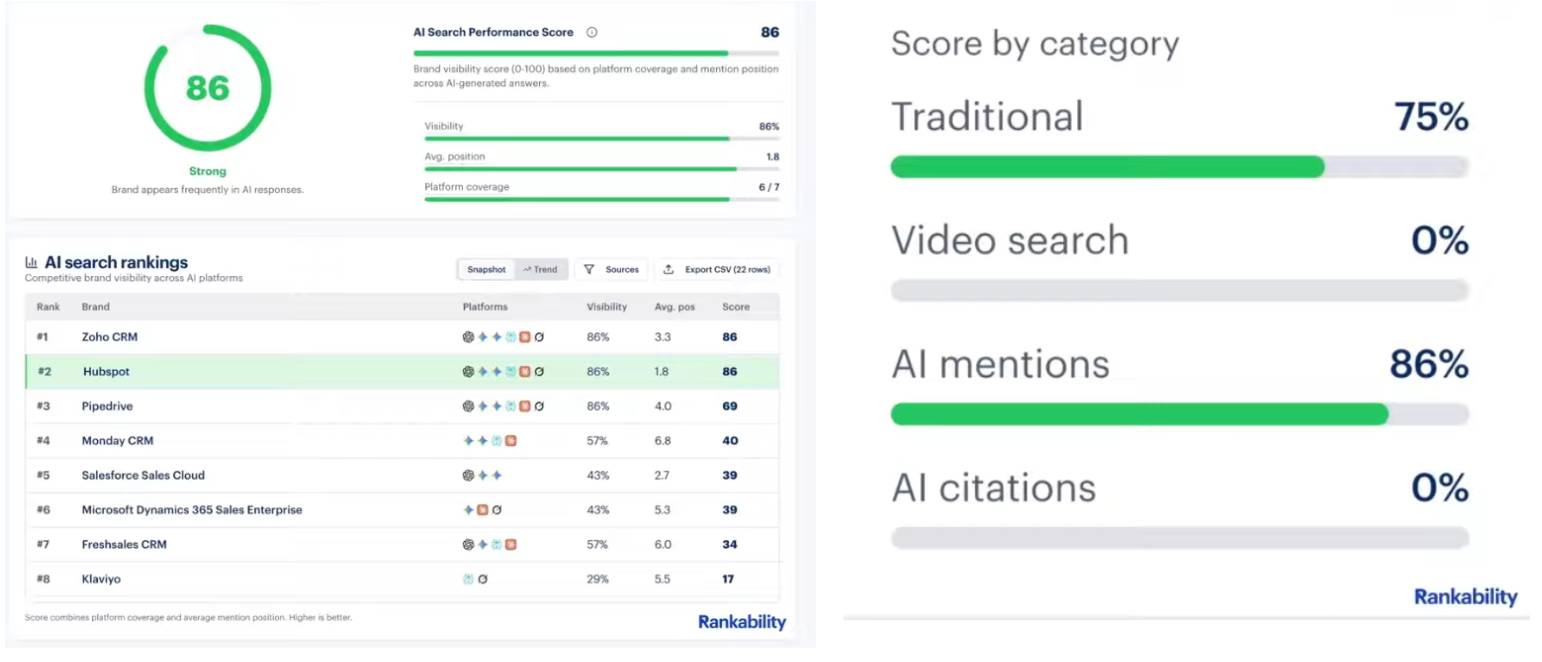
Nathan points to HubSpot as the ultimate case study for this shift. If you ask almost any AI platform for the "best CRM," HubSpot consistently shows up in the generated answer.
But how can they be doing so well as far as getting their brand mentioned in AI answers but they're not showing up basically as an AI citation at all?
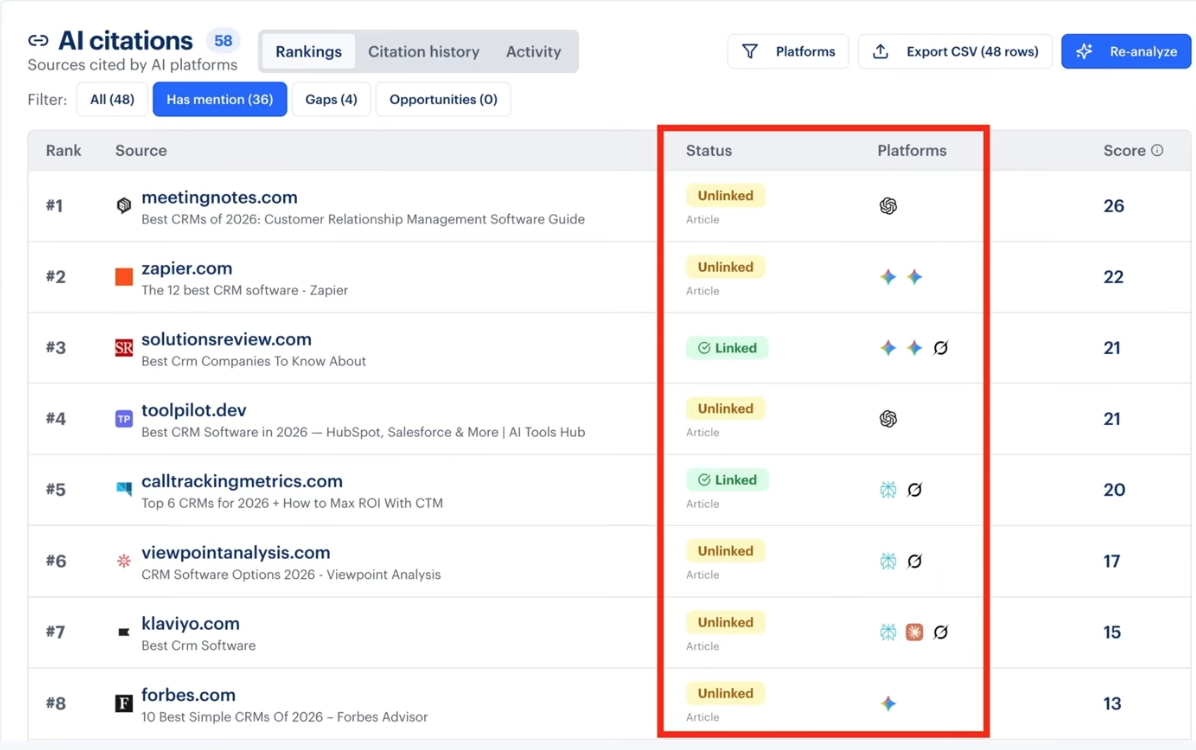
Here is where the data gets fascinating. HubSpot’s own website is rarely the actual citation the AI provides. Instead, HubSpot dominates because its brand is mentioned on 86% of the third-party pages like Meetingnotes, Zapier, and Forbes that the AI does cite.
“There about 50 citations we extracted just for this one particular query (best CRM). They showed up on these citation sources 86% of the time. This is what influences the AI answers,” Said Nathan.
If your brand continually shows up on the core sources of retrieval, you are almost guaranteed to show up in the AI answers. It's really not magic.
And here is the detail that is turning the traditional SEO world upside down: 72% of those brand mentions are entirely unlinked.
For years, SEO professionals have obsessed over backlinks, while PR professionals cared about share of voice and simply getting the brand name mentioned.
In the era of AI search, the PR mindset is “winning”. AI engines don’t discriminate when it comes to links. They don't care if a link is missing, nofollow, or even clearly marked with a sponsor tag. All that matters to the algorithm is that your brand is repeatedly covered on those core sources of retrieval.
Why Earned Media Now Is Even More Important
So, does this mean you should abandon your website entirely and only chase PR mentions? Not exactly. Your strategy needs to adapt.
In highly competitive industries, like the CRM space HubSpot operates in, there is a massive amount of capital and content flooding the internet. In these high-stakes environments, earned media is non-negotiable.
You could have the most perfectly optimized website, a thriving YouTube channel, and an active LinkedIn presence. But at the end of the day, those are all your owned assets. To an AI platform retrieving 10 to 100 different sources to formulate an answer, your website is just one single source.
AI models are designed to seek consensus. They aren't going to just take your word for it; they need third-party validation. Therefore, in high-competition verticals, almost all of your attention must be focused on getting your brand mentioned on external, earned media sources.
The Unified Playbook: Stop Random Link Building
This shift fundamentally changes how marketing teams need to operate. For a decade, standard SEO advice was to build "site authority" through random link building. While traditional links still matter for ranking your own site on standard search engines, they aren't the primary driver for AI visibility.
To win in the AI era, SEO and PR teams must execute a unified strategy from day one:
1. Identify Commercial Queries
SEO teams need to find the core commercial keywords driving the business (e.g., "best CRM") rather than purely informational ones.
2. Extract the Citations
Run those exact queries across ChatGPT, Google AI Overviews, Gemini, Perplexity, and Claude. Extract every single URL the AI uses as a citation to build its answer.
3. Deploy PR for Targeted Mentions
Pass that exact list of URLs to the PR team. Their new mandate is strictly targeted: get the brand mentioned on those specific pages. Because AI doesn't penalize sponsored content, this can be achieved through organic outreach, paid collaborations, or sponsored posts. Just lead with the value proposition of advertising.
At the end of the day, off-site trust signals have always mattered. But AI search has finally forced the issue. You can write content all day on your own website claiming you are the best, but if the rest of the internet isn't validating that claim, the AI won't either.
It’s time for PR and SEO to finally sit at the same table.